Sunday, September 23, 2007

Blog Action Day

I just heard about something which has caught my attention. Sorry if this is old news, I’m a little sheltered, here in Southeast Asia. It is called Blog Action Day. On October 15th, over 5,000 bloggers will post something regarding the environment. I think this is a very interesting experiment/demonstration/field test.
Blog Action Day poses the question: “What would happen if every blog published posts discussing the same issue, on the same day? One issue. One day. Thousands of voices.”
Have you ever had the experience of learning a new word and then it seems like everyone around you is using it? I’m wondering if Blog Action Day will generate a similar result. Will dinner tables, news agencies, coffee clutches around the world all, through six degrees of separation, turn their attention to the environment as a result of Blog Action Day?
As for me, I think it’s time well spent to create an entry on that day to talk about something to do with the environment – probably something relating to my observations in Laos, an emerging country with some very serious environmental risks looming in the near future.
Take a look at the Blog Action Day website, you may find it interesting. http://blogactionday.org/

Saturday, September 22, 2007

Guava Mouth

Seven score and one week ago, Abraham Lincoln, issued the Emancipation Proclamation. Tomorrow will mark the fifty year anniversary of 9 black students entering the doors of the exclusively white Central High School in Little Rock Arkansas. Over the years, things have become much better in the USA, not only for blacks, but also Asians, Latino and all other ethnic groups. Many people will say racism is a big problem in the US. While I don’t disagree that racism is an issue in American culture, I have to say that it is not nearly as bad as other places.

As a white man living in Vientiane, Laos, I face a daily barrage of racism. Most of it is petty remarks or assumptions (I’m white hence I filthy rich). While most Laotian people are friendly and welcoming, racism is an inescapable fact of life for whites in Asia. I spend an inordinate amount of time and energy thinking about, dealing with, and deflecting racism.

Last weekend I went to the supermarket to restock my cupboard. This particular supermarket is located at ITECC (Lao International Trade Exhibition and Convention Center) and has a good selection of western and eastern food. I like shopping at ITECC because not only does it have some hard to find items (kidney beans in a can, for example), but there is something about supermarkets that I find very comforting. Even in my own country, I will often spend a couple hours wandering the aisles of a supermarket during off hours. However, the experience I had last weekend was not as comforting as I had hoped.

About midway through my shopping, two small Laos children unaccompanied by an adult, noticed me. “Falang! Falang!” they yelled. Falang is what they call foreigners in Laos. They made a big production out of my being in the supermarket. Hanging on to my cart, touching everything I had placed there, they continued to shout, ‘Falang’ and other observations their language such as bald, big, big nose and so forth. Everything I touched, they had to touch. And they said things like “Falang likes this” or Falang likes that. The other shoppers chuckled at this – some ignored it. I tolerated their behavior since I can understand that I may be quite different than what they are used to. After about 15 minutes of these two kids pestering me, I finally said, in English, “Ok, enough, time for you to hit the highway.” They disappeared.

Later, I thought about this experience. I thought about how that would go over in my own country. What would happen in an average American supermarket if two white kids followed an Asian around yelling “Asian!, Asian!”. Would the other shoppers chuckle? Would the store manager walk by, blandly amused. Ah, just kids!. I don’t think so. I think if a kid did that in a Southern California supermarket, at best they would be dispatched from the store. If I were there to witness it, they would have the pleasure of hearing a very long and sharp-tongued lecture on the shame of broadcasting ones ignorance and hate filled mind.

This type experience is not an unusual occurrence, it’s just one example. I try to explain to my Laos friends how, in my culture, if a shop keeper tried to charge varying prices based on the color of someone’s skin, they would very quickly be in serious legal trouble. If a group of customers all stood around joking about how an Asian immigrant could not pronounce words as well as they should, I would think there is a good chance someone would speak up and say “Hey, that’s not right”. I know this type of thing does happen in the USA, but not anywhere near as frequently as it does in Asia.

I wonder about the source of racism in America, specifically, anti-Asian sentiment. I don’t think I’m going to win any friends with this next remark, but I have to say it. Is it possible that some of the racism Asian-Americans feel comes from their own deeply ingrained racist behaviour?

It’s a slow day for beggars today – five in one hour, 3 repeat visitors. The rich Lao people sitting at the next table are not approached. The beggars only beg from white people.

For a little more understanding of the word Falang, this person’s blog sheds a little light on the etymology and blithe attitude of racism in Southeast Asia: Real Life Thailand - Farang kii nok

Wednesday, September 19, 2007

Free Market Mirage

A colleague of mine and I have lost touch for the past year an a half while I have been in Southeast Asia. The other day, I noticed him on Facebook and added him as a friend. My reasoning for wanting to stay in touch with him is twofold. First, I consider him a friend; a person who I respect immensely for both his professional acumen as well as being a man of impeccably good character. Second, I want to stay in touch with him because, professionally, we share the same ideology of enthusiasm, integrity and an inquisitive nature – hence, there is potential for us to enter into mutually beneficial business relationships. (As an additional note, Naisan’s capacity for light-speed synapse inspired many advanced educational techniques I developed between 2003 and 2006)

Looking into his current endeavors, I noticed he has a blog at www.naisan.net\blog. His latest entry dealt with the death of capitalism. I found it very interesting to read his short post and move my mind back to the conditions of the USA while I have been immersed in a very different situation here in Laos.

As capitalism dies from the insidious workings of the omniscient “them” back in the USA (and in most of the globe), I am watching Laos go through the painful birthing of it’s own form of one-party capitalism. Laos, in an attempt to sustain itself as a sovereign nation and free itself from least developed nation status by 2020, has entered into a free market economy. It’s not like there is much choice for Laos. After decades of solidarity with the Soviet Union, once big brother conceded that great philosophical mind-plays are not always sustainable socio-economic methods, Laos had to enter into the global market.

How will that work? I wonder. How will a country who has sustained itself in a vacuum outside the free market since 1975, transfer it’s ideology to a free market mindset while at the same time the world free market seems to be collapsing under the weight of the likes of Cheney, Bush, GE, Haliburton and the rest of the behemoths? Will this birth into free market become a stillborn lark – too little, too late – or will Laos’ expertise learned from decades of corruption, lobbying and special interests be boon to its role in the soon coming free market mirage?

DISCLAIMER: Of course, what I write here is merely off-the-cuff, personal pontifications. I certainly do not claim to be an expert on capitalism, communism, socialism or the current state of affairs on the global economy – or even the Peoples Democratic Republic of Lao, for that matter. I shudder at the thought that any harm would come to the nation of Laos – a country I love immensely and for which I have great respect for the perseverance of it’s people and leaders.

By the way… beggar count today: 22 individuals in 90 minutes. Four adults, 18 children. Akiki is taking the day off, I guess.

Monday, September 17, 2007

Begging Monopoly

Begging. I don’t like begging. I used to give money to beggars. Now, only under a very extreme circumstance will I give a beggar anything at all and in those cases, only food. It’s not that I am unsympathetic, it’s just that I can not tolerate the idea that a stranger who is completely uninterested and unwilling to do anything for me expects me – often demands of me – to fork over my own cash. I just don’t work that way.

Back in the 1980’s when I was living in Brooklyn, there was a beggar at one of the subway stations in my neighborhood. Each day I would see him sitting in the passageway mumbling to himself with his hands outstretched. On occasion, early on, I would drop a few coins in his hands. Then, one day, I realized that I had been passing this same person in the same place wanting the same thing for a very long time. I thought about it. I had had over a dozen jobs over 8 years, moved house five times, put myself through school, bought a car, wrecked the car, sold the wreckage, got married, went from wearing $80 suits to wearing $800 suits… why on earth did I give this man money? His “job” was to profile those people who have money and expect them to hand over their cash, assuring them he had no intention of doing anything other than living off their wages.

Now, granted, this is not a simple subject. The man clearly had some mental problems and Mayor Koch had flushed New York City’s mental hospital funding so the man was at a huge disadvantage (Koch later funded an effort to involuntarily remove the mentally ill from NYC streets). Once the markings of disenfranchisement manifested; soiled clothes, unbathed body, tangled hair, unwashed teeth, deprivation of medication, getting any form of employment was much more difficult. The momentum grew in his terrible plight. However, I firmly believe the number one reason why this man was (and still is as of 2005) begging, is because he makes money doing it. Lots of money.

I know another man in Vancouver, Canada. He is a crack addict. He gets funding from the British Columbia government to pay for housing and food. He uses 100% of his begging income for drugs and alcohol. I’m not making this up – I’ve had plenty of conversations with him. Each night you can find him outside the 7-Eleven on 10th and Alma asking people for money and cigarettes (retail value of one cigarette in BC is about $0.50CDN). Does he have any intention of stopping drugs or stopping begging? Absolutely not. He likes crack. And the 7-Eleven customers have no problem paying for it.

Why am I talking about this today? It is something that I have been paying attention to here in Laos for over a year. A year ago I noticed only a few beggars on the streets of the central tourism area of Vientiane. Today, I see a dramatic growth. A more official counting by Peuan Mit/Friends-International in October 2004 counted 209 street children in one day. Whatever the actual numbers may be, I am confident in my observation that there is a very real growth surge in the begging industry in Laos.

One of the most notable and prominent beggars in Vientiane, Akiki, sits outside Joma Bakery (the most expensive coffee shop in the city) or next door at the Phimphone Market (one of the most successful retail businesses in the city). He’s a nice enough guy and is respectful to his “customers”. To be fair, I should mention that Akiki has Downs Syndrome. And, granted, it is hard enough for a skilled, healthy, young man to find work in Laos, let alone a person who is mentally or physically challenged. However, there is no way Akiki is going to change his profession. Why? Money. Lot’s of it.

Consider the average monthly wage for a government worker in Laos is 350,000kip/month (about $35USD). One afternoon, I watched how much Akiki earned in 3 hours: 150,000kip. I’ve seen him make less, but certainly those numbers are not unusual. I have even had discussions with others who, like me, have seen him using his ATM card. An ATM card!!!

The other day, right after I posted my last entry, “Coopetition”, I saw Akiki do something which inspired me to write this entry. It was a thought of competition. I was sitting outside the Joma Café when three other street children had approached me for money. I told them no. They were about to approach the other table sitting outside when Akiki jumped up from his spot next door, blew his police whistle, and chased the 3 others away. It seems that not only does Akiki make a Laos fortune at his job, but he maintains a monopoly on his place of business (he does share it with one physically handicapped boy, on occasion).

Is Akiki, or the other alleged 208 beggars in Vientiane to blame for this? No, not really. He may have a monopoly on those two storefronts, but there are plenty of other places to beg. It’s not really the location, it’s those people who fund the industry who are most at fault. And the people who are funding this operation are the tourists – tourists with wonderfully benevolent intentions.

Some people give money to ease their conscience. Others, out of pity. Still, others, really believe they are helping someone. Whatever the reason, at the core of the issue, it is ignorance the fuels the begging industry. People who give money to beggars are ignorant of the problems they are causing – giving money to beggars causes much more damage than relief. Do people really think that beggars don’t talk to each other? Of course they do. And they know exactly how much they can earn and from who they can earn it (maybe, tomorrow, I will elaborate on that one).

Furthermore, behind the scenes of this industry is a much more insidious menace at work. It is often organized crime, the mafia or a mafia, orchestrating the begging circuit. If the cartel came to you safe suburban door and asked for money, exactly how much would you give… to ease your conscience?

Maybe I am opening myself up to a lot of criticism, but it is important to spread the word. Under no circumstances should anyone respond to begging with anything other than a polite ‘NO’. If you feel you must give a portion of your income to the needy, do so in a proper way. Here’s one example: $50 = One below the knee prosthesis - COPE Laos. Using PayPal, about 7% of your $50 donation is NOT used towards helping someone in need; the rest goes directly towards the recipient’s care.

In the time it took me to write this (which included a number of delays and stopping for lunch), I was approached seven times by different beggars. In the same time, I did not see one single Laos national approached for money. It is clear that tourists are targets but it is not only because of the apparently enormous cash roll they are carrying, but also because they do not understand what they are financing: a highly competitive, dangerous, and self-esteem destroying, unnecessary way of life.

Never stand begging for that which you have the power to earn
– Cervantes

Saturday, September 15, 2007

Coopetition

Too often people think that one person’s success precludes another’s. This simply is not true. “Miss Hoyle” on MySpace published a list of 33 writer’s contests on her blog the other day. In her introduction she says, “Okay, I might be shooting myself in the kneecap here by sending "my competitors" all this information; but in truth, I think we writers need to work together.”. I could not agree with her second thought more.

One of the projects I intended to complete in Laos was a series of podcasts providing information about major tourist attractions in Laos. Just the other day, an acquaintance asked me how the project was going. I winced. The podcasting project I intended to do was shelved for one major reason: I could not find a Lao national who was willing to put forth the effort to learn about these things and visit the attraction. Despite not finding a co-narrator, I continued for a couple months writing draft scripts for the project, but eventually saw the writing on the wall and abandoned the project.

Today, on Craigslist, I found a site who is looking for exactly this type of thing. Authors/narrators are free to set their own prices (if any) and can publish at their own pace. The site is called Audio Snacks and they want people to submit recordings of guided tours of any place where they have “inside knowledge”. As a result, I am thinking about reviving my own project of podcasting in Laos.

Have you ever seen someone get bent out of shape because someone else got a job, materialized an idea they had or achieved some other form of success? Have you ever felt this yourself? It’s an outrageous reaction to someone else’s success and it is completely in the wrong direction. Success is like love – there is an infinite supply of it. All you have to do is chip in, share, and keep an open mind. There is plenty for all of us and it has a compounding effect on the world.

Thursday, September 13, 2007

Dig It

Some things don’t change no matter where you go in this world. Across the street from the café where I write, there is an empty lot. It has been empty a long time. Just yesterday, or this morning, a big pile of sand was dumped. A neighborhood dog is intrigued. I know this dog. I’ve seen him around. We’ve never spoke, but I know his face and he probably knows my scent. He stands on top of the mound. He is king of the new sand pile. He barks at another dog – a blond dog who is slow & numb and doesn’t like being barked at. The other dog, the one on top of the sand pile, he sees his street from a new vantage point. He digs. He digs furiously tossing sand from the top of the pile into the lot, onto the sidewalk, out into the street. The worker with the wheelbarrow comes to take a load of sand to the storefront under renovation; the dog steps off the mound, lets the worker fill the barrow, then returns to his perch. He digs some more.

I wrestle with writers block – two months, now. It’s awful. Some say it’s a fallacy, writer’s block; it doesn’t exist; it’s just an excuse for not writing. I can think of nothing. I delete nearly everything word I type. I can only watch the dog and think how some things are the same the world over. Dogs & new piles of fresh soft sand. Dig. It makes me think of one of my favourite stories, a well known story.

Two boys, twins. One an optimist, the other a pessimist. The pessimist is put in a room piled high with toys, games and all the diversions so loved by little boys. He sits, long-faced, making no attempt to even explore any of the toys. ‘Why?’, he’s asked. ‘Because I have no one to play with.’ He is the pessimist.

The other boy, his twin brother, the optimist, is put in a different room, a room with only a giant pile of horse manure – nothing else. Equipped with no shovel or tool, the boy climbs onto the pile of manure and begins to dig. He digs furiously, excitedly, hopeful. ‘Why?’, he’s asked, “Why are you digging in this big pile of manure?’. ‘Well,’ he explains, ‘with all this manure around, there must be a pony nearby.’.

Thank you, dog. Although we have never spoken, today, you are my saving grace. Not only have you given me something to write about, you have also made me hope there is a pony in here somewhere. Keep digging, doggy, you’ll find your bone, I just know it.

Walking Meditation

There are different forms of meditation; walking meditation, standing meditation, reclining meditation, sitting meditation. The most common form is sitting meditation. Sit down. Get comfortable. Focus. Focus on the chakras. Chakras are all over the body. There are 7 big ones aligned with the spine, the crown chakra sits just above the top of the head. These are energy nexuses. Focus on them. It takes some practice, but it’s not as difficult as it first seems.

I like walking meditation. Years ago – lifetimes ago – I did a lot of sitting meditation. Things have sped up since then and I like to go places, do things, get somewhere. I still practice sitting meditation, but I also like walking meditation. Meditating while walking took some time to learn, but like sitting meditation, it is not as difficult as it first seems. And it opens the door to opportunities.

This month, I’ve decided to give up my motorbike. After a few days of walking, I realized I had been missing too much of my surroundings. The ban, the village, where I live is a nice community. There are rich people and poor people and I like that things are mixed that way. In the center of the ban is a crossroads with two “restaurants”. One is a noodle shop which is very popular with the university students. I’ve eaten there enough times that they know not to give me any chicken feet. Across the road, the restaurant is more like a pub. It’s underneath a house and the ceilings are about six feet high. The floor is concrete but it could just as well be dirt. There are some walls, but not many. Up until the point where I gave up my motorbike, I had never stopped there, even though I wanted to.

Walking back from work one afternoon, I passed by this place. Some men my age were sitting having some beers. They said hello. I said hello. Next thing I knew, we were passing around shots of Lao Khao, rice whiskey – powerful stuff, could be used as nail polish remover as well. On my motorbike, I simply sped past this place and never got to know my neighbors. It’s hard enough being white around here. There’s no way to hide it and there is no way anyone is going to overlook the fact that I am different. Different I can handle. Aloof is something that just isn’t me. As I sped past on my motorbike, it was too easy to label me as aloof.

Meditation is not a matter of checking out – being aloof to ones surroundings. Actually, it is a matter of checking in. It is a practice of getting to the reality, the heart of the matter, the true existence of things. Walking to and from work (I use that term creatively), I get to practice my walking meditation in the very literal sense. I also have more of an opportunity to get to the heart of my existence here in Laos, in my neighborhood.

Before, I was simply speeding past my own life. Hurrying from home to there and from there to home, I was missing what I came here for. I was not fully engaging in a culture I found so appealing, so natural and in tune with my own resonance. Instead, I was just driving through it.

Now, on my way home, I stop off at the “pub” and share a few beers with the guys. There’s a lot of conversation. Sometimes I have a general idea what they are talking about. Other times, I’m completely clueless. I don’t mind it much. I know a few jokes and they laugh like crazy when I tell the guy with seven children “Condom! Condom!”. They know I like Lao whiskey, beer with ice, grilled pork intestines, mint, meatballs. They know I am not above getting down on my knees and playing with the children. The children have a blast playing with the rubber masks I carry in my backpack just for that purpose.

Yesterday, I was fortunate enough to have a translator. It felt good to get some feedback. They like me. They think I am a good person. They are glad I am part of their community. They see that I am different than most falang (foreigner). They agree that I am Lao – somehow, born in the States, white with Anglo and Mediterranean parents, I am Lao. Maybe a past life. Maybe a future life. Certainly, in this life, I am Lao, inside, somehow.

Wednesday, September 12, 2007

Summer's End

The earmark of summer’s end, Memorial Day (or is it Labor Day? I can never remember. The one at the end, the one just before school… I think it’s Labor Day), came and went over on the other side of the world and here in Laos, I got to sneak squeeze a little more time. No one was watching. No Memorial Day. But, I have to let it end, though. I have to get back to it. Back into the flow, back on track and - ouch - nose to grindstone. Summer must come to an end. I squeeze a little more time because there’s no Memorial Day in Laos. The next weekend, or the one after, is the boat racing festival in Luang Prabang. It seems like an appropriate marker.


September 11 is the day for the Boat Racing Festival in Luang Prabang. It’s also Horkhaopadapdin, the day – the very very early morning part of the day – to honor deceased relatives with offerings to assure their spirits that they did good in this world and their memories are respected, cherished, thanked, safe journey wherever you are. Longer boats. The boats on the river are larger than what we know in Cambridge, Dartmouth, Georgetown, Exeter, the Head of the Charles. They are longer and wider and heavier and 50 not 8 men are geared with short fat paddles not long thin oars. The rhythm is still there. The coxswains use drums and some are not coxswains, they just drum and there’s one in the front as well as the back. There might be some in the middle, too. They row on the Nam Kang and not the Mekong. The Mekong is too mighty; harsh and wide and full with obstructions. The banks are closed and the riverside is lined with Lao people and very few tourists – the children dress in their best clothes and some little girls proudly wear new, clean, yellow patterned dresses holding daddy’s hand overwhelmed at the sights and the uncountable faces and knees and packages and dogs eating bones under street side vendor’s tables.


Country folk come in from all over the province. It’s a big day. It’s easy to spot who is cosmopolitan and who is not. I’m told the children used to wear their school uniforms if that’s all they had, but now some wear dirty t-shirts and ripped pants if that’s what they want. They are becoming more worldly. It’s easy to spot who has made special effort to bring the family to see the festival and visit with cousins and aunts and uncles and maybe an eldest son lucky enough to study at Wat Sop, Wat Sene or Wat Phousi. Little boys proudly walk through the crowds with plastic carbines, with plastic AK-47’s, with plastic Luger’s. The men soak themselves in Beer Lao and the women join in as much as they can without forgetting they have children to watch but it’s not a problem because Lao men are just as likely to pick up their crying child and console them.


The races seem tertiary after the street side vendors and the face watching over big bottles of beer and grilled chicken on sticks and sweet Lao sausage. The crowds are overwhelming to me. To many balloons and umbrellas trying to poke me in the face. We retreat across the peninsula to the Mekong side – to a quiet riverside restaurant for an early afternoon sitting of Lao barbeque; it’s called ‘sindha’ or something like that but I like to call it sim card because it sounds like sim card and saying ‘I want to eat sim card’ makes me chuckle. It’s easier to make such jokes when broken English is the standard and I can’t speak the local language.

We could take a bus back to Vientiane. It’s cheaper. $11.50. But it’s not much fun and no longer interesting to me – I’ve done the trip too many times for it to stimulate anything. I don’t even get upset at the power lines blemishing across a stunning pair of limestone karsts north of Vang Vieng. Even the VIP bus – the good one where they give you little packaged sponge cakes and a bottle of water and they give you moist towelettes near the end of the trip just before the tire blows out and by the time we’re all back on the bus and the tire is changed, our hands are dirty again – it’s just not interesting anymore. The flight is six times more expensive. The flight is eight times quicker. I decide to skip the bus ride.

I’m a little torn about flying. My brother tells me not to fly because around here things are not done the way they are done in the west and it’s not quite as safe as the budget airlines who sprung up out of deregulation in the 80’s (was that the 80’s?). My embassy tells me not to take the bus because the Hmong are still ticked off and the jungles north are filled with resistance and it’s been a while but there have been incidents…

The ticket agent hands me back my passport, credit card and boarding pass. I look at the date: September 11. It’s just another day but I can’t help but make the connection. I wait for boarding to begin. For me, it’s just another dead zone strip of time between the festival and getting home. For others, it’s a different new experience.

It’s fun to watch someone fly for the first time. In the waiting area there is a collected excitement about her. Excited on boarding. Excited on take off. Excited even putting her bag through the x-ray machine and she beeps and the man waves his wand around her and that too is exciting. The second time through she doesn’t beep and they make a joke about it. The sun has set and there is only jungle below so no lights to see; only blackness and the reflection of her face in the window. Eventually she eases back into rapid fire page flipping of the inflight magazine. At the back there is a calendar of events, holidays and festivals for 2007. It says the 26th is the day for remembering and making offering to deceased relatives. I no longer find factual contradictions an annoyance. The 8 a.m. bus can leave at 1:45 p.m. if that’s when it leaves. That’s just the way it’s done. It’s a contradiction. Fact.

I’m glad she’s older. Too old to discover the child thrill of bringing her seatback tray to it’s full upright and locked position then back down and up and locked and unlocked and down and locked and unlocked and locked and unlocked… click, click, click, clickclick, clickclick, click. 5 minutes. 10 minutes. How long will this go on? Glad she’s too old for that. She leaves it in the full upright and locked position. I felt something let go in me when I showed her how to use the seat belt. An old resentment from being too many times a passenger watching the preflight safety demonstration. We roll our eyes, the seasoned travelers, at the flight attendants who have to, by law, demonstrate how to operate the seat belt. Who doesn’t know? She didn’t know. Why would she? It took her a couple tries to master it. I’m glad for the experience, glad I can let go finally. One less thing to irritate me about flying. One more thing to remind me how much child exists in all of us – wide eyed, not knowing, we don’t know everything and when we do, there is always the plane instead of the bus.

Monday, August 13, 2007

Don't Wait

I had a conversation with someone the other day. She was depressed. She wondered, What will do? How will I do it? How can I do anything? I can not do anything. She’s twenty-one years old and doesn’t know which direction her life is going.

Listening to her grief, I thought of my self when I was that age – actually, for most of my early twenties I worried about such things, sometimes sinking into a deep fatalistic depression. I let her vent her fears and concerns for a while and tried to turn her in the direction of a little less self-pity and a little more action.

“You’re still young,” I told her, “you don’t have to know what you’re going to be when you grow up. Don’t worry, it will come to you.”

It’s not very easy to accept such advice. It puts a lot of faith on something that no one can back up without the passage of time. I tried a different, more tangible tactic to help my friend pull herself out of her self-inflicted malaise.

She doesn’t know what she wants to do. That’s ok. There are plenty of times in life when we don’t know what we are going to do next. Eventually, the idea will come and it is at that time we must act. Which brings me to the title of today’s entry, DON’T WAIT.

When we are not sure of what we will do next, that is not the time to sit and wonder what we will do next. Obsessing on our own confusion gets us no where other than more deeply entrenched in our own confusion. It serves only to make us feel worse and make arriving at a decision a painful waiting experience.

Of course, if you don’t confront your problems, they will never be resolved. However, once confronting our problems becomes the problem itself, then it is time to focus our attention elsewhere and allow time – and our subconscious genius – to work out a suitable solution.

I told my friend to table her worries of what will she do and focus instead on how she will do. Worrying about what you will be when you grow up is not helping.

I suggested to her, “Instead of worrying, why don’t you learn how to succeed first.”

The expected blank look came to her face. People all around the world do not know of this method, however, it is viable and very effective. Learn how to succeed and you will succeed at whatever you choose. The secret of succeeding is not a matter of getting lucky or having the right contacts. The secret is to teach oneself how to set goals and achieve them. Be warned, though, learning how to succeed starts small and is greatly reliant on setting realistic goals.

Twenty-one years old. Don’t know what to do. Don’t know how to do it. Can’t do anything. It seems like a very short dead end street to me. But look over there, not too far off this path is another path. A path begging to be explored. It’s a path where specific, measurable, achievable, realistic, time-based (SMART) goals can be set and reached Set your sights low at first. I will make sure all my bills are paid and all my accounts are up to date each Friday for the next two months. Maybe that’s too aggressive. For five consecutive days, I will wake up each morning before 9:00 am and make at least one phone call to a prospective employer. Eventually, your goals will become more complex as you master setting and achieving goals. Then you will be prepared to do what you want to do when you grow up.

It’s not so much a matter of what your goals are. It’s more a matter that you train yourself to set smart goals, approach them with clarity and determination and recognize the rewarding feeling of accomplishing what you said you would do. It’s a very useful technique for strengthening the success muscles. Something I wish I had learned twenty years earlier. Something I wished I knew about when I was sitting around, feeling sorry for myself, wondering what I would be when I grow up. I could have been spending that time teaching myself how to succeed so that once I figured out what I would do, I would have some experience in achieving my goals.

Friday, August 10, 2007

Amateurs

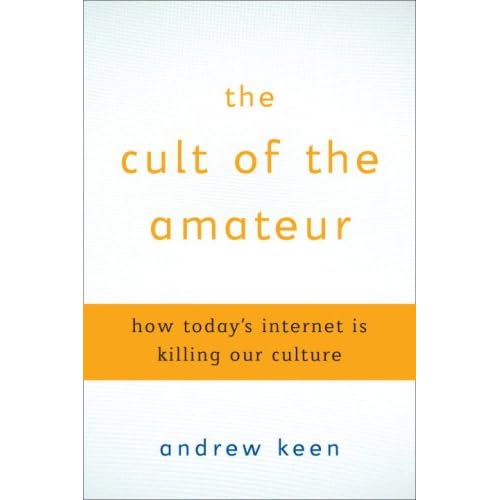
There’s a reason to my lack of posting lately. It has to do with a newspaper article I read poolside at the Nana Hotel in Bangkok (fifteen stories of perversion in Sukhumvit). The article was a review of a book called “The Cult of Amateur: How today’s Internet is killing our culture” by Andrew Keen. I can’t find a copy of the book here, but I’ve read a number of reviews and reader-reviews. Most people say the same thing: it gives provocative insight, but goes off the rails in some areas. Regardless if the book is good or bad, it’s existence and general sentiment has made me think a little bit more about what I’m putting out in blog form.

There is a compounding element that has added to my paralyzed efforts. Much of the content I produce is based on Buddhist philosophy. One of the Buddhist principles is to not disseminate false information (ubiquitous in all faiths... I think). Ethically I do have some responsibility to be accurate when presenting any material; personally, I feel this even stronger in the context of religion or spirituality. While never presenting myself as an expert on the subject and using some good-ol’ fashioned doing the best I can, I hope to maintain some form of immunity.

I read those words and can not help but wonder: Immunity from what???

Do we need immunity in order to speak or act or write? Do we need licenses – certifications of authenticity – to empower us to share an idea, opinion or belief? Is the onus on the speaker, and not the listener, to define what is fact and what is conjecture? If so, I need to shut up a long time ago.

Similar to the padded playground where no one learns to be careful because they don’t understand how much broken bones hurt, people are trying to muzzle free, misinformed, communication. Long before the world became literate (or started down that path), Og was free to go up to Toh and grunt for as long as Toh would entertain him. Toh never believed Og’s grunting, but he would listen to it from time to time, just to get another perspective. Toh is a brave man for taking his chances with the myriad misinformation outside the padded playground.

The cult of amateur goes back much further than the internet, so does the killing of culture. Amateurs have been badly fixing their own tools, poorly advising their children, inappropriately consoling their heartbroken friends and a doing a bad job with a whole plethora of other things for centuries. They’ve had no formal training, often gave lousy advise and disastrous results have followed. Other times, a laymen has provided good advice leading to healthy marriages, community progress, even scientific or artistic breakthroughs. Sometimes, it’s not even the quality of the advice but the cathartic nature of communication itself which spawns a bright ending.

So, if communication – and I stress, communication of unwittingly false information – is the death of our culture, how long ago did our culture begin to die? Certainly no one ever thought that cats would steal the souls from sleeping infants and no one ever told another person that bathing was a deadly act. No chef ever told another that tomatoes were poisonous and there was never an educated person who believed the world was flat.

My opinion, which is always to be regarded with great skepticism, is that the cult of amateur is exactly what defines culture. It is the expert who categorizes culture, yet it is the amateur who constitutes it. Nothing new is happening here. Og and Toh grunted. Horace Greeley duked it out with the penny press. Oprah hosted the highest rated talk show in television history. Og, Toh, Horace and, I believe, Oprah, had no college education, no doctorate in anything and certainly no credentials other than they experienced, they listened, they decided what they believed and then they spoke up – sometimes inaccurately with disastrous results. Calling Horace and Oprah amateurs isn’t really fair since they are experts in spinning information. However with the clarity of retrospect, ask a General and not a newspaper editor where to send troops; ask a therapist and not a talk show host how to save your marriage.

Are we a culture who buys into bogus beliefs? Certainly. Yet, it isn’t the people spewing those beliefs who need corrective action. It is the audience who must question the source and the validity of anything they hear or read. It’s a scary world out there. You will be on your own deciding what to believe and what to dismiss. Have faith that you, too, will make a bad decision from time to time. You will probably also say something that isn’t exactly true. But don’t worry about killing your own culture, it’s been dying for a lot longer than you think.

[By the way, some things in this entry I looked up on the internet. It’s definitely all true, because someone put it on a website.]